In the past few years, CJ Mahaney (along with many other faithful friends & pastors) has helped me realize that as a Christian, I still need to hear the good news of the gospel, day in & day out. To that end, here are 6 new books on the gospel that
CJ recommends you think about reading.
-----------------------------------------------------
“The gospel cannot be preached and heard enough, for it cannot be grasped well enough,” wrote Martin Luther.*
By God’s grace I have been a Christian for 38 years. I agree with Luther—I still cannot hear the gospel enough. Each morning I seek to preach the gospel to myself by my study of Scripture and through the strategic reading of supplemental books about the cross. Over the past several months it has not been difficult to find enough books to fill this role. Six wonderful new books on the gospel have been published in the last five months, and they constitute a portion of my recent reading diet. Here they are:
 God the Peacemaker: How Atonement Brings Shalom by Graham A. Cole (Dec 2009), 257 pages
. This is a technical but reader-friendly addition in the NSBT series (New Studies in Biblical Theology). And not only is it detailed and readable, but I found it to be deeply moving, too. Many times throughout this book as I read about the atoning sacrifice of our Savior I ceased reading, looked up from the book, and broke into song. (In the interest of full disclosure, this often happens when I read. I am a noisy reader and often break into song while reading.)
God the Peacemaker is a wonderful book that explains why God's intention to restore shalom (peace) to his creation requires the death of Christ. Cole writes in the introduction:
We live in a troubled world. As I write, there are reports of a devastating cyclone in Myanmar, an earthquake in China, fighting in the Sudan and Iraq, shooting death after shooting death on the south side of Chicago. The list could go on and on. The waste of human life is enormous....Yet Christians believe in a good God who as the Creator has never lost interest in his world. The key evidence and the chief symbol of that divine commitment is the cross of Christ....Central to the divine strategy is Christ, his coming and his cross. The troubles and calamities will end. (19)
In recent years there have been many books that emphasize God’s restoration of shalom, but too few that highlight the central role of the cross in this plan.
 By Grace Alone: How the Grace of God Amazes Me by Sinclair Ferguson (Feb 2010), 118 pages
. Few have taught me more about the gospel of the grace of God than Sinclair Ferguson. I was reminded of the profound influence of his ministry in my life a couple years ago when I did
this interview with him about the cross. Through his sermons and writing I am personally reminded of grace, affected by grace, and inspired to lead by grace. His latest book on the gospel of the grace of God is a gem—showing us why we should be amazed by it. Ferguson writes,
Being amazed by God’s grace is a sign of spiritual vitality. It is a litmus test of how firm and real is our grasp of the Christian gospel and how close is our walk with Jesus Christ. The growing Christian finds that the grace of God astonishes and amazes. Yet we frequently take the grace of God for granted. (xiv)
Ferguson writes as a man who is himself amazed by grace.
 Scandalous: The Cross and Resurrection of Jesus by D.A. Carson (Feb 2010), 168 pages
. In the preface Carson writes,
Nothing is more central to the Bible than Jesus' death and resurrection. The entire Bible pivots on one weekend in Jerusalem about two thousand years ago. Attempts to make sense of the Bible that do not give prolonged thought to integrating the crucifixion and resurrection of Jesus are doomed to failure, at best exercises in irrelevance. (11)
This book is not only
not doomed to failure but destined to serve readers in their appreciation of the gospel as he expounds on both the death and resurrection of the Savior. As Mark Dever says in his endorsement, "This professor can preach. These are model messages on crucial passages." They are crucial passages, presented as a model of exegesis and exposition. The book is developed around five core passages: Matthew 27:27–51, Romans 3:21–26, Revelation 12, John 11:1–53, and John 20:24–31. Pastors can easily adapt this structure and use these passages to develop a sermon series to serve their churches.
 Atonement by various authors, edited by Gabriel N.E. Fluhrer (Feb 2010), 142 pages
. This is a compilation of messages delivered over the years at the Philadelphia Conference on Reformed Theology. Contributors include J.I. Packer, R.C. Sproul, and Ferguson. In his preface, editor Gabriel Fluhrer opens the book with these pointed words: "This is a book about blood and it soaks every page" (ix). And a little later he writes,
Today, along with other great doctrines of the Christian faith, the doctrine of the blood atonement of Christ is under attack. It is derided as “cosmic child abuse” and traded for a grandfatherly sentimentalism that muffles the piercing cries of the Savior being nailed to the cross. The pride of our sin dilutes the simple, clear, and shocking teaching of the New Testament: God killed his perfect Son to save hate-filled rebels from the wrath they deserve. (x)
The messages included in this book were finely chosen.
 What Is the Gospel? by Greg Gilbert (April 2010), 124 pages
. Gilbert's new book on the gospel is clear and compelling. I wrote in my endorsement that I hoped to place this book in the hands of every pastor and church member. And the only thing I would add is that I hope it finds its way into the hands of non-Christians as well. I agree with Mark Dever: "This little book on the gospel is one of the clearest and most important books I've read in recent years." Help me put a copy of this book into every hand. Buy a case of them and begin giving them away immediately!
 It Is Well: Expositions on Substitutionary Atonement by Mark Dever and Michael Lawrence (April 2010), 223 pages
. This series of sermons was published out of concern over the neglect of the gospel in the life of local churches. In the preface Dever writes,
Have you wondered about the cross lately? Have you wondered where it is in your own church, or in your own life? It's our prayer that these meditations will help you re-center your life on God's sacrifice for us in Christ and join in the celebration that's going on eternally as the saints in heaven praise God for the Lamb who was slain for us. (15)
Like Carson’s, this book can provide a pastor with a sermon series on the gospel. The 14 sermons are presented in canonical order on these texts: Exodus 12, Leviticus 16, Isaiah 52:13–53:12, Mark 10:45, 15:33–34, John 3:14–18, 11:47–52, Romans 3:21–26, 4:25, 5:8–10, 8:1–4, Galatians 3:10–13, 1 Peter 2:21–25, and 3:18.
I am grateful that we have many wonderful (and affordable) books about the gospel of Jesus Christ. We need these books because we cannot read enough about the gospel. We cannot read enough about the gospel because we cannot grasp it well enough.
-----------
*
What Luther Says: An Anthology, compiled by Edwald M. Plass (St. Louis: Concordia, 1963), vol. 2, pp. 563–564.


 by Wayne Grudem (70% complete)
  by Hank Hanegraff (30% complete)
  by Brian Fikkert & Steve Corbett (50% complete)
 by Eric Metaxas (5 stars)
  by John Owen (5 stars)
 by Lou Priolo (5 stars)
 by Arnold Dallimore (5 stars)
  edited by Christopher Morgan (4.5 stars)
  by Frederick Leahy (5 stars)
  by Iain Murray (5 stars)
  by Richard Phillips (5 stars)
  by Dave Harvey (4.5 stars)
  by Jerry Bridges (4.5 stars)
  by Gordon Fee (4 stars)
  by David Platt (5 stars)
  by Jonathan Acuff (4 stars)
  by Don Whitney (5 stars)
  by Greg Gilbert (5 stars)
  by Nancy Guthrie (5 stars)
  by Gina Welch (3.5 stars for interesting read, not content)
  by Trevin Wax (4 stars)
  by Tim Keller (5 stars)
  by Voddie Baucham (5 stars)
  by Vaughn Roberts (5 stars)
 by John Piper (75%)
 by John Piper (75%)
  by N. T. Wright (45%)
 by Doug Wilson (15%)
  by Martin Lloyd-Jones (25%)
 by Tim Keller (80%)
 by Tim Keller (5 stars)
 by Collin Hansen (4 stars)
 by Graeme Goldsworthy (4.5 stars)
 by Mike McKinley (4 stars)


 by Tedd Tripp is hands down the best book on parenting I have read yet. The one thing I won't forget from it is Tripp's emphasis on going after the child's heart rather than the child's behavior. If you go after their heart, the behavior will inevitably follow.
 , Vaughan Roberts seeks the big picture of the entire bible. His conviction is that the whole bible is telling one story, not lots of little stories all disconnected and such. This book will help you when you are reading through books of the Bible like Leviticus and cannot fathom how in the world this relates to Jesus Christ.
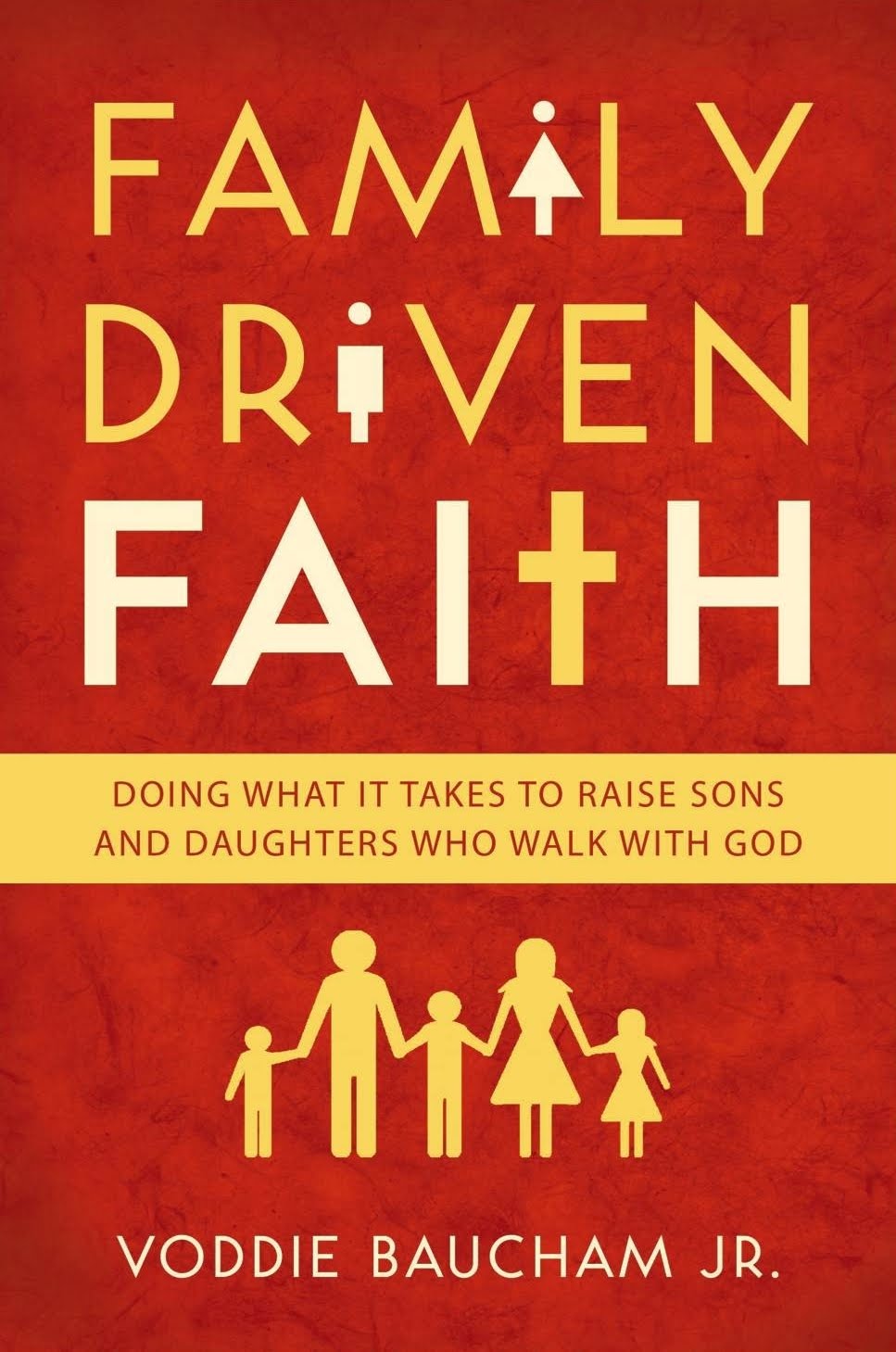
 by Voddie Baucham Jr. This is not lay-down-on-the-couch-and-relax book. Make no mistake about it, Voddie brings it hard. He hits parents right between the eyes with conviction after conviction on their responsibility to "raise their kids in the way they should go." It's not the job of a youth pastor, and it's not the job of a Christian school teacher. It's the parent's job. So do it. That's the constant message of Mr. Baucham, and I commend it to you.
